
3 Days · 2 Nights
Tea Traditions & Water-Town Lanes · Private Tour
Shanghai – Suzhou – Hangzhou
A route featuring High Speed Train, Heritage, Museums, Classical Gardens, Ancient Street, Poetry, History, Hill.
The journey
Review the scheduled visits and daily service facts below. Confirm seasonal opening, transport, accommodation and optional activities for your chosen dates.
Price on request
Price conditions
Price on request. A confirmed quotation will specify dates, group size, accommodation and included services.
Highlights
What’s included
- Experienced drivers & air-conditioned vehicles
- Professional licensed English-speaking local guide
- Hotel accommodation with breakfasts
- Domestic flights (economy class) or high-speed trains (second class) listed in the itinerary
- Admission tickets, activities, meals listed in the itinerary
- Accident insurance
- Our service from tour planning, handling, operational and finishing your trip
What’s excluded
- International airfares
- Entry visa fees
- Personal expenses
- Single room supplement
- Recommended optional activities
- Arrival/departure flights or train on the first and last day
- Tips or gratuities for guides and drivers
Day by day
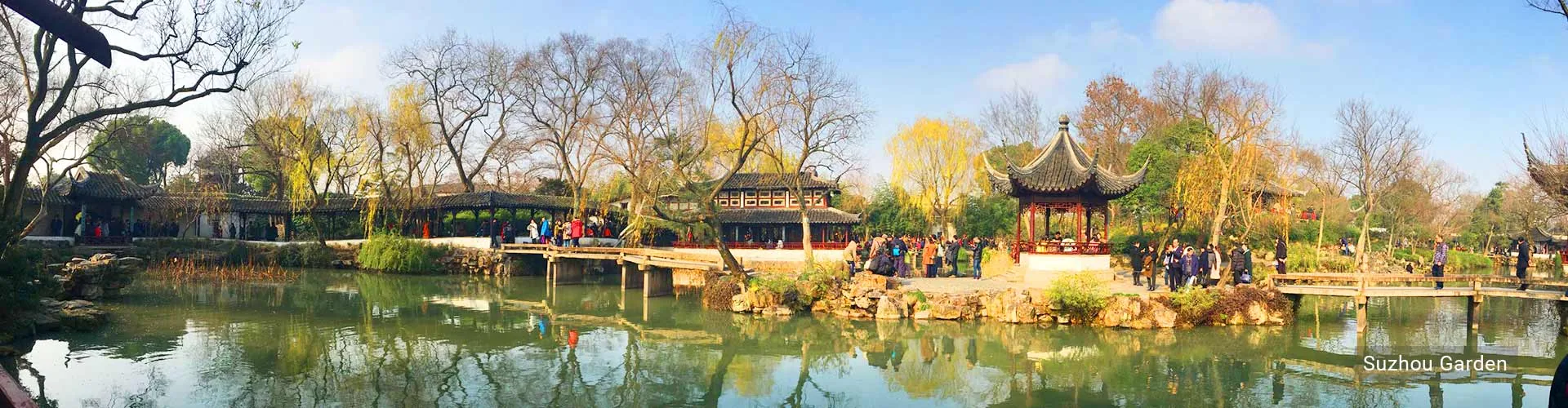
- Day 1 — Suzhou Tour with Jiangnan Gardens | Humble Administrator’s Garden, Suzhou Museum, Tiger Hill, Pingjiang Road (L): Scheduled route: Suzhou Tour with Jiangnan Gardens | Humble Administrator’s Garden, Suzhou Museum, Tiger Hill, Pingjiang Road (L) Daily plan: This morning, your guide will meet you in the hotel lobby and escort you to Shanghai high speed train station for your bullet train to Suzhou (about 0.5 hour, 90km). Welcome to Suzhou, reputed as the "City of Gardens" and "Venice of the East," offering an elegant and picturesque atmosphere. Upon arrival in Suzhou, you will be escorted to explore this poetic and charming Jiangnan city. Your first stop is a brief visit to the Suzhou Garden Museum (苏州园林博物馆) to gain a clear understanding of the Classical Gardens of Suzhou, which consist of 9 gardens in the historic city of Suzhou listed as a UNESCO World Heritage Site. Then, continue your discovery at the serene Humble Administrator’s Garden, the largest garden in Suzhou, which is considered one of the greatest examples of quintessential Chinese landscape design. Built in 1509, Humble Administrator's Garden (拙政园) is the finest example of a Ming Dynasty garden. Retired magistrate Wang Xianchen (王献臣) created this masterpiece over 16 years. He named it to reflect his desire for a humble life after public service. The garden has 3 sections: the expansive Eastern Garden, the distinguished Central Garden, and the exquisite Western buildings. With its ponds, rockeries, trees, and pavilions, the garden unveils scenic views like an unrolling scroll painting. As you meander along the circular route, be impressed by the intimate courtyards, elegant architectural details, and majestic artisan stonework while immersing yourself in the gorgeous poems depicted in each architecture. These poems reflect the notable attitudes of the owners. The Orchid Snow Hall, the main hall in the eastern part of the garden, gets its name from Li Bai's poem verse "Alone between heaven and earth, the clear breeze scatters the orchid snow" (独立天地间,清风洒兰雪), implying a pure and lofty character. Walking along the path, you will come to the House of Sweet-Scented Osmanthus, the main building in the garden, named after Zhou Dunyi's essay "In Love with the Lotus" (香远益清,亭亭净植), implying noble and elegant virtues. Overlooking the fan-shaped "With Whom Shall I Sit in the Pavilion", you will evoke the atmosphere of Su Dongpo's poem "With whom shall I sit? The bright moon, the fresh breeze, and I" (与谁同坐?明月清风我). Continuing your journey, you will reach Jianshan Hall, named after the poem by Tao Yuanming "Gathering chrysanthemums by the eastern hedge, I contentedly gaze upon the southern mountains" (采菊东篱下,悠然见南山). Every step in this poetic atmosphere is accompanied by architecture that tells a story through its connection to a poem. Important tips for appreciating and photographing Suzhou Gardens:1. Begin by observing the overall layout and composition of the garden from the map. This will give you an impression of the main themes and designs.2. Take a tour of the garden with an open mind to appreciate its essence. Pay attention to the use of spatial techniques like borrowed scenery, facing scenery, leaked scenery etc.3. Notice the architecture - its layout, forms, and how it complements other elements like plants, rocks, water. Understand the cultural significance behind the designs.4. Spend time comprehending the mood and emotions conveyed through the names of the buildings and their accompanying couplets.5. Look out for scenic views that capture the seasonal beauty of the garden.6. Frame and photograph interesting perspectives using the garden's structures and scenery. To delve into over 2500 years of history, you will visit Suzhou Museum, boasting remarkable architecture and impressive collections. Designed by the world-renowned architect I.M. Pei, this museum seamlessly blends classical and modern elements, preserving the traditional white powdered walls of Suzhou to evoke a classical ambiance while exuding a contemporary sensibility. The museum's distinct contours, strong geometry, and captivating silhouettes are truly awe-inspiring. As you step into the museum, you will find yourself enchanted by the beauty that filters through windows and dances with the rays of light. The scenery constantly evolves, creating a dynamic and captivating experience. While exploring the museum's halls, you will encounter a rich display of local Suzhou crafts and cultural artifacts from the Wu region. Among the treasures showcased is the renowned Sword of King Yu of Wu, along with other exquisite pieces like lacquerware, bamboo carvings, jade carvings, gold bricks, clay sculptures, and musical instruments. After lunch, you will visit the iconic Suzhou landmark - Tiger Hill (Hu Qiu虎丘), known as the "Number One Mountain in Wu Region". This site holds cultural significance related to prominent Tang Dynasty poet Bai Juyi (白居易). He oversaw the excavation of the Shantang River, forming Shantang Street and creating the poetic transportation route of "Seven Li Shantang to Tiger Hill". “From the road leading to Kaishan Temple, water and land traffic frequently intermingled. Silver bridles guided spirited horses, while flower boats carried beautiful women” (自开山寺路,水陆往来频。银勒牵骄马,花船载丽人). At Tiger Hill, marvel at the renowned Tiger Hill Pagoda, the oldest surviving brick pagoda in China and sole remaining structure from the Five Dynasties period. Its architectural style embodies Tang and Song aesthetics. Tiger Hill Pagoda is often called the "Leaning Tower of China". Also explore the Sword Pond at Tiger Hill, said to be the entrance to the tomb of King Helü of Wu with 3,000 treasure swords buried below. As described in a poem, "Bizarre rocks with a thousand monks seated, a mystical pond where a sword rests deep. The Hai Dang Pavilion on both sides, the mountain at the heart of the temple" (怪石千僧坐,灵池一剑沉。海当亭两面,山在寺中心). Afterward, take a leisurely walk along Pingjiang Road, a living map of the Song Dynasty. Its cobblestone lanes and riverside pathways perfectly showcase the charm of old Suzhou. Walk through the historic streets, know Suzhou Pingtan, or try authentic Suzhou snacks. If you like, you can also take 30-40 minute traditional boat ride (optional experience) along the Pingjiang Road Canal. This gentle journey lets you experience the romance of “When you come to Suzhou, every household lives along the river,” and feel the unhurried rhythm of life that has shaped Suzhou for centuries. Option for Suzhou Evening Tour:Night Performance at Master of the Nets Garden (夜游网师园;19:30-22:00) The Master of the Nets Garden is celebrated for its small yet elegant design. Regarded as the pinnacle of small-scale gardens in Suzhou, the Master of the Nets Garden is considered to be the most exquisite of Suzhou's famed classical gardens. The Master of the Nets Garden comes alive at night with lively dance, music, and opera performances staged amidst the garden's elegant architecture. Follow your guide from pavilion to pavilion and immerse yourself in eight local performing arts specialties, including Kunqu Opera (昆曲) and Pingtan (评弹Suzhou-style ballad singing), as well as folk dance, traditional Chinese instrumental music, and even comedy. After the performance, feel free to explore the garden in a new light. (Tip: The performances take place from 19:30 to 22:00. from mid-Mar. to mid-Nov.) Dining: Lunch Accommodation: Hotel in Suzhou downtown
- Day 2 — Suzhou Tour with Jiangnan Water Town | Zhouzhuang Water Town, Qinghefang Street (B, L): Scheduled route: Suzhou Tour with Jiangnan Water Town | Zhouzhuang Water Town, Qinghefang Street (B, L) Daily plan: This morning, transfer to the famous Zhouzhuang Water Town (周庄), located about an hour away from Suzhou (approximately 47km away). Then, head to Hangzhou from Zhouzhuang (140km, 2 hour) and visit Hefang Street (河坊街). Overnight in Hangzhou, another poetic and romantic Jiangnan city. As the premier water town in the Jiangnan region and selected as one of CNN's "Top Ten Most Beautiful Towns in the World", Zhouzhuang is renowned for its well-preserved Ming and Qing architectural ensembles that showcase the traditional charm of a water town. With a history spanning 900 years, over 60% of the buildings in Zhouzhuang proudly retain their original style. The picturesque scenery of bridges, canals, and traditional homes gained worldwide fame through the renowned painting "Double Bridges" by artist Chen Yifei (陈逸飞) in 1983. As you step into Zhouzhuang, take a leisurely stroll on the Fu'an Bridge, where you can admire the scenic beauty of the Jiangnan landscape with the Double Bridges as a backdrop. Along the river, visit Shen Hall, known as the "Seven Entries and Five Gate Towers," featuring a typical architectural layout of a "front hall and rear hall." Make sure to also visit Zhang Hall, which bears witness to the saying "Entering by sedan chair through the front gate and departing by boat from the backyard." Immerse yourself in the rich culture and history of Zhouzhuang by visiting the Zhouzhuang Museum, where you can explore the traditions and heritage of this thousand-year-old water town. Time will stand still as you savor the moments and conclude your day at a leisurely pace. After your Zhouzhuang Water Town tour, you will head to Hangzhou (140km, about 2 hour). Welcome to Hangzhou, the Paradise on Earth. After arriving Hangzhou, you can move to stroll through Qinghefang Street (Hefang Street清河坊), located in the old Hangzhou city, which will bring you back to the scenes of prosperity at the foot of the old imperial city. As the markets at the back of the imperial court of the Southern Song Dynasty (1127-1279), Hefang Street (河坊街) has not only witnessed the thousand years of changes in Hangzhou but also retained the cultural memories of the old generations. If you are interested in Chinese Herbal Medicine Culture you can visit the landmark of the Hefang Street - Hu Qing Yu Tang (胡庆余堂 intangible cultural heritage), a over 100-year-old traditional Chinese medicine pharmacy and Traditional Chinese Medicine Museum (self-pay胡庆余堂中药博物馆). Founded by Hu Xueyan (胡雪岩) in 1874, the wealthiest merchant in the late Qing Dynasty and the Medicine King of Jiangnan, the museum is an excellent spot to appreciate the Qing Dynasty architectural style with a front shop and rear workshop, watch pharmacists make a prescription, try a cup of healthy herbal tea. Today, the "Golden Shovel and Silver Pot" (金铲银锅) displayed in the museum have become national-level cultural relics and are acclaimed as "Chinese National Treasures". Wandering along the street you can try to find a unique architecture made of bronze (江南铜屋) while passing all kinds of shops and sampling all kinds of local snacks. Also, if time permits you can also visit the Former Residence of Hu Xueyan (胡雪岩故居) to learn more about Hu Xueyan and his brand of Hu Qing Yu Tang. Options for Hangzhou Evening Tour: 1.Impression West Lake Show (19:40- 20:35)The Impression West Lake Show (印象西湖-最忆是杭州) is a large-scale outdoor performance directed by renowned Chinese director Zhang Yimou (张艺谋), the one who directed the opening ceremony of the Beijing Olympics. The show takes place on the West Lake, with the lake itself serving as a natural stage. It incorporates elements of dance, music, lights, and stunning visual effects to create a mesmerizing experience for the audience. You will enjoy the performance of "The River, Flowers, and Moon on a Spring Night" (Pipa), "Dance of the Tea Harvest" (Hanfu), "The Butterfly Lovers" (Liang Zhu Violin Concerto), "High Mountains and Running Water" (Guqin), "Swan Lake" (Ballet), "Dream Paradise" (Chorus), "Colored Clouds Chasing the Moon" (Folk Music), "Unforgettable Jasmine", "Ode to Joy", and "Enduring Memories of Hangzhou最忆是杭州". This show got its name from the famous Tang dynasty poet Bai Juyi’s poem called “Memories of Jiangnan” (白居易《忆江南》). It has received international acclaim for its artistic presentation and has become a must-see performance for visitors to Hangzhou. (Note: Need to book the ticket in advance. In the event of force majeure (such as severe weather conditions, mechanical failures, etc.) that prevent the performance from proceeding as planned, the show will be canceled and refunded.) 2. The Hangzhou Grand Canal Night Cruise (19:00/19:30/20:20; about 1 hour)The Hangzhou Grand Canal Night Cruise (Beijing - Hangzhou Canal Night Cruise京杭大运河夜游) is a one-hour cruise on the world's oldest and longest man-made canal, which has a history of over 2,500 years and is listed as a World Heritage site. Stretching 1,794 km long, the canal starts in Beijing and ends in Hangzhou, connecting the Yellow River with the Yangtze River. By taking a night cruise, you can experience the vibrant existence of the Grand Canal while immersing yourself in the enduring prosperity of Hangzhou that has spanned millennia. Along the way, you can get a close-up view of the award-winning night lighting of the canal, and enjoy the cultural squares of West Lake, the Imperial Wharf, Fuyi Warehouse, the Qianlong Fang, Xiahezhijie Street, Qiaoxizhijie Street, finally reach the first ancient bridge in the Jiangnan region of the Beijing-Hangzhou Grand Canal - Gongchen Bridge (拱宸桥), before turning back to Wulinmen Wharf (武林门码头). The best time for night cruises along the Hangzhou Grand Canal is from April to October each year when the weather is pleasant, allowing you to fully appreciate the beautiful scenery of Jiangnan. (Note: During the low season of December, January, and February, the number of cruises may be reduced by the scenic area.) Dining: Breakfast, Lunch Accommodation: Hotel in Hangzhou downtown
- Day 3 — Romantic Hangzhou Tour | China National Tea Museum, Meijiawu, Xiangji Temple (Near Grand Canal), West Lake, Depart Hangzhou (B, L): Scheduled route: Romantic Hangzhou Tour | China National Tea Museum, Meijiawu, Xiangji Temple (Near Grand Canal), West Lake, Depart Hangzhou (B, L) Daily plan: This morning, your guide will meet you in the hotel lobby and escort you to explore Hangzhou. Enjoy your time in Hangzhou, the “Heaven on Earth” and a cultural city with a history of over 5,000 years. Upon arrival, start your Hangzhou tour at Xiangji Temple (香积寺), located near the Beijing-Hangzhou Grand Canal. The temple and the ancient Gongchen Bridge form a charming historic scene loved by locals. Built in 978, the temple is dedicated to the “Aksobhya Buddha” and grain-related folk beliefs. Explore the Twin Pagodas, Heavenly Kings Hall, and Mahavira Hall. Locals believe its prayers are as effective as those at Lingyin Temple. Next, drive to the China National Tea Museum, the only national museum dedicated entirely to tea culture. It houses 3,865 items, including ancient tea specimens and foreign tea sets. The museum has two branches: (1) Shuangfeng Branch - closer to West Lake, featuring Jiangnan-style garden, a statue of Lu Yu, and exhibits on Longjing Tea and Chinese tea history. (2) Longjing Branch - set on a hillside overlooking West Lake, focusing on global tea culture, traditional tea-making techniques, and historic tea rituals such as Tang-dynasty tea boiling and Song-dynasty Dian Cha. Continue to Meijiawu Tea Culture Village, the largest Longjing Tea-producing area. Known for receiving state leaders and foreign guests since the 1950s, the village becomes especially lively during the Qingming tea-picking season. More than 30,000 fresh tea buds are needed to produce 1 kg of premium Longjing Tea. Stroll through streets lined with Ming and Qing architecture, tea houses, and workshops. Visit Lu Zhenghao Tea Plantation to witness traditional tea roasting. If time permits, you can stop by the Premier Zhou Enlai Memorial Hall (closed Mondays). Meijiawu is also a great place to enjoy lunch featuring authentic Hangzhou cuisine and Longjing tea. Afterward, experience West Lake (UNESCO World Heritage Site) like a local. West Lake is famous for temples, gardens, bridges, pagodas, tea houses, willow-lined paths, and literary heritage. Countless poems, legends, and love stories are tied to its beauty. Choose your way to explore: take a walk, bike (free for the first hour), take a lake cruise (self-pay), or ride a sightseeing bus (self-pay). Walk along the Su Causeway (苏堤) and recall Su Dongpo’s famous lines: “The shimmering ripples delight the eye on sunny days; The misty hills are marvelous in rainy haze…” If you’re a fan of Chinese legends, you may also explore: Fans of Dream of the Red Chamber can visit the filming site Quyuan Fenghe (曲院风荷) or take a boat tour (self-pay) to Three Ponds Mirroring the Moon, the scene depicted on the Chinese one-yuan banknote. After the tour, it is time to end your 3 Days Suzhou Hangzhou Tour from Shanghai. Your guide will escort you to your hotel or the airport/train station for your flight or high speed train to your next destination. Thank you for choosing Asia Odyssey Travel (AOT) for your China tour, and we are always here working for you and hope to see you again for your next trip to China/Asia. Dining: Breakfast, Lunch Accommodation: /